Camping in Korea — What It’s Really Like From a Seoul Dad Who’s Done It For Years
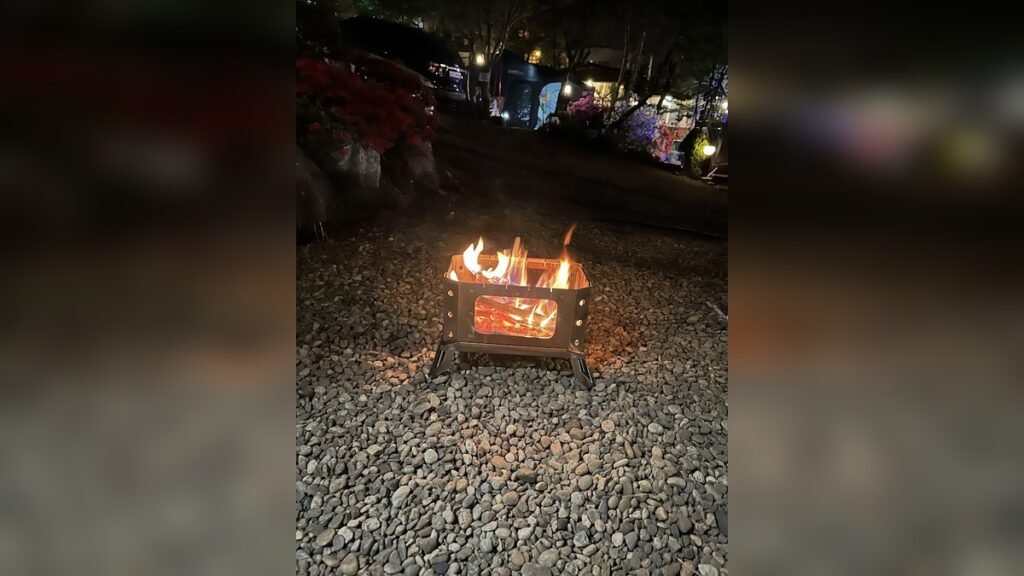
There’s a word in Korean that doesn’t translate into English.
Bulmyung (불멍). It means staring blankly into a fire — no thoughts, no phone, just the flames. In Korean camping culture, it’s not just something you do. It’s the whole point.
That’s why I keep going back. Escaping the density of Seoul for a night, sitting in front of a fire pit, nothing on the agenda. My daughter roasting marshmallows beside me, a cold beer in hand, watching the fire burn down.
That feeling now costs considerably more than it used to.
Korean Auto-Camping Culture: Why It’s Different
Korea’s auto-camping culture is something you don’t see quite the same way anywhere else.
Auto-camping means you drive your car directly to your campsite and unload everything right there. No hiking in with a pack. No leaving the gear in a lot. The car parks next to the tent, and that’s your base.
Because of that, nobody holds back on equipment. Big tents, full table setups, proper fire pits, lighting rigs. Some campsites look more like outdoor living rooms than campsites. First-time foreign visitors tend to stop and stare.
There’s also glamping — furnished tents or cabins with beds, electricity, and often a private fire pit. Comfortable, well set-up, no effort required. I’ve tried it a couple of times. It’s fine.
But I always come back to auto-camping. Setting up the tent yourself, building the fire from scratch, waking up to condensation on the canvas — glamping doesn’t give you that. The effort is part of it.
Campsite Prices in Korea: What Changed
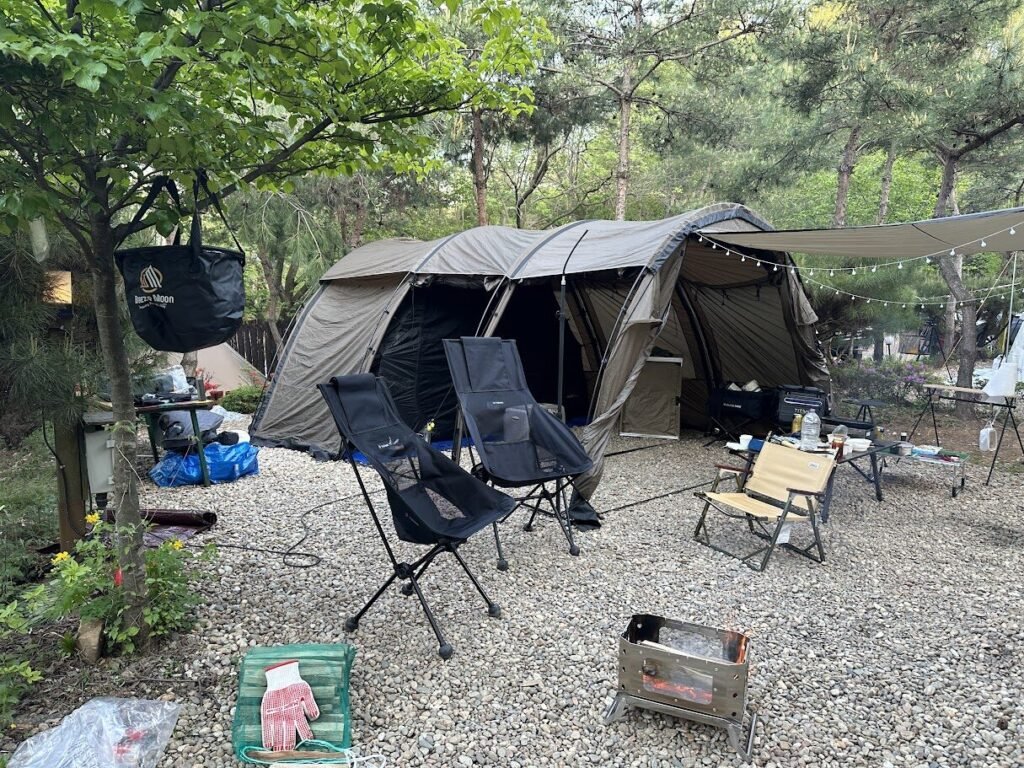
Korean campsite prices have moved significantly in a short amount of time.
Before COVID, a single night at a Gyeonggi-do campsite near Seoul ran around ₩30,000–₩40,000. That number is hard to find now.
Private Campsites
Standard private campsites are now in the ₩60,000–₩80,000 per night range. Well-equipped family sites — especially kids-focused campgrounds with playgrounds and amenities — can run ₩120,000 or more per night. And many of those require a minimum two-night booking.
That’s ₩240,000 just for the pitch. At that point, you’re in budget hotel territory.
Those spots still fill up fast. Families with young kids don’t have many other options that check all the boxes, so demand stays high regardless of price.
Public Campsites
Local government-run campgrounds sit around ₩30,000–₩40,000 per night. Reasonable pricing — the problem is getting in.
Bookings go through NOL, the camping reservation platform run by Yanolja, or through individual local government sites. The system itself is well built. The issue is competition. Popular sites sell out within a minute of reservations opening. Not “sell out quickly” — one minute.
You have to be logged in and ready at the exact moment the booking window opens. I’ve missed it more times than I’ve made it. After a failed attempt, you find yourself checking back every day for cancellations. The mental load of trying to get a campsite starts before you ever leave Seoul.
Two Campsites I Keep Going Back To
Hantangang Auto Camping (Yeoncheon)
This one takes effort to get to. Yeoncheon is in northern Gyeonggi-do — plan on an hour and a half from Seoul, minimum.
It’s worth it. The facilities are clean and well-maintained. The Han Tan River runs through basalt columnar joint formations — the landscape looks different from most Gyeonggi-do camping spots. And the distance from Seoul acts as a natural filter. It doesn’t have the overcrowded, slightly frantic energy that some closer sites get on weekends.
The drive is the barrier that keeps it from getting ruined. Reservations are managed through the Yeoncheon County Facilities Management Corporation.
Beombawi Camping (Gimpo)
The opposite situation. Gimpo is close — accessible enough that you can decide to go the same day if a site opens up.
Not the most striking scenery, but the basics are solid and it’s popular with families. When you want to camp without committing to a long drive, this is where I end up.
What Korean Camping Actually Costs: One Trip Breakdown
Camping in Korea is not cheap once you add everything up. The site fee is just the starting point.
Per Night, Family of Three
| Item | Cost (KRW) |
|---|---|
| Site fee (private campsite) | 60,000–80,000 |
| Food (meat, sides, breakfast) | 50,000–70,000 |
| Charcoal or firewood | 10,000–20,000 |
| Drinks and snacks | 10,000–20,000 |
| Miscellaneous (ice, supplies) | ~10,000 |
| Total | ~140,000–200,000 |
One trip, one night: ₩150,000–₩200,000 is a realistic number for a family of three. That’s before gear.
Korean Camping Gear Culture: The Spending Trap
Korean camping communities have a phrase for this: gaemi jiok (개미지옥) — the ant pit. Once you step in, you can’t get out.
It starts reasonably. Tent, tarp, table, chairs, fire pit. You can get a basic setup for under ₩1,000,000 if you buy carefully. Entry-level gear in Korea is decent and widely available.
Then you go a few times. The tent is heavier than you’d like. The table isn’t quite right. The fire pit is too small. You need better lighting. The cookware set needs an upgrade.
Every camping trip generates a new list. And Korean outdoor gear culture is deep — there are entire communities dedicated to specific brands, specific setups, specific aesthetics. It’s easy to get pulled in.
I started with a reasonable initial budget. I have stopped calculating what the total number looks like now. If I knew, I might stop going.
Why I Still Go
Prices went up. Booking is a fight. Gear spending has no ceiling.
And yet.
Working in Seoul, managing a kid’s after-school schedule, weekends that somehow always have something on them — the night where I set up a tent, build a fire, and am genuinely not required to do anything is worth more than the preparation cost.
My daughter burns her marshmallow every time and laughs about it. We sit by the fire until it gets late. That’s it. That’s the whole evening.
Bulmyung. There’s no English equivalent because the concept doesn’t translate — the specific quality of sitting in front of a fire with nothing to accomplish. Experience it once and you’ll understand why the word exists.
How to Book a Campsite in Korea: What You Need to Know
A few things that are useful to know before your first Korean camping trip:
Start with NOL. Yanolja’s camping reservation platform covers a lot of public campground bookings and the system is well-organized. Popular sites go fast — check reservation opening dates in advance and be ready at the exact moment they open.
Rent gear before buying. Many campsites and gear shops offer rental packages covering tent, tables, and basic equipment. Try it once before committing to purchases. The ant pit is real.
Spring and autumn are the right seasons. Korean summers are hot, humid, and include a rainy season (jangma). September through November and March through May are the sweet spots. Winter camping exists and has its own following, but it requires specific cold-weather gear.
Camping in Korea is more expensive than it was. The booking process is genuinely competitive. The gear spending doesn’t stop.
But this weekend, I’ll probably open the reservation site again anyway.
Campsite prices based on 2026 figures in Gyeonggi-do. Prices vary by location and season.