Gyeongui Line Forest Park: A Local’s Guide to Seoul’s Favorite Walking Trail
I live in Seodaemun-gu, and on weekends, this is where we end up. Not because it’s on a tourist list — but because it’s just there, a short walk from home. From Sacheon Bridge, the path leads straight into Yeontral Park. Walking the full stretch of Yeontral Park at a relaxed pace takes about 20 to 30 minutes.
I’ve been coming here across all four seasons, and it’s never quiet. That’s not a complaint. The energy is part of what makes it worth coming back to.
What Is Gyeongui Line Forest Park?
The park was built on land freed up when the Gyeongui railway line was moved underground. Once the tracks went below ground, the city converted the surface into a long, linear green space. It runs 6.3 kilometers from Gajwa Station in Mapo-gu to Hyochang Park Station in Yongsan-gu.
The most well-known section is the Yeonnam-dong stretch, nicknamed Yeontral Park — a portmanteau of Yeonnam-dong and New York’s Central Park. It sounds like a stretch at first. Walk through it on a weekend afternoon and it starts to make sense.
For official park information, visit the Seoul Metropolitan Government’s Gyeongui Line Forest Park page.
From Sacheon Bridge to Yeontral Park
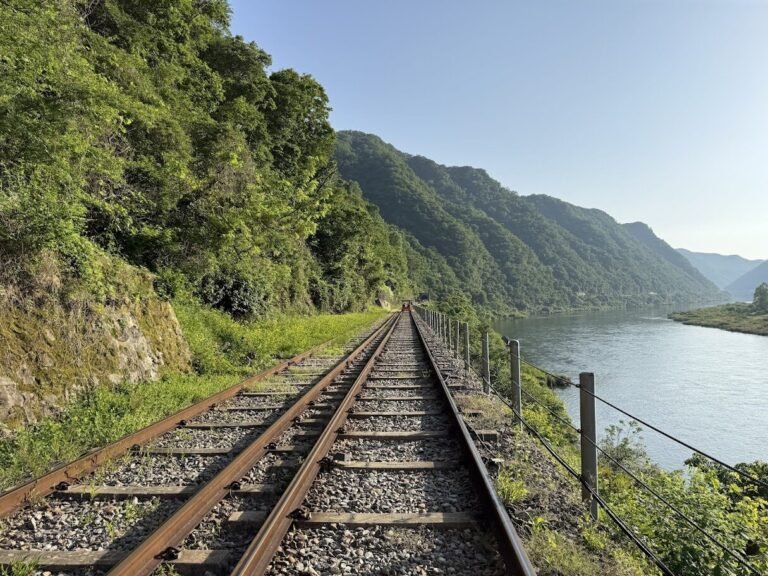
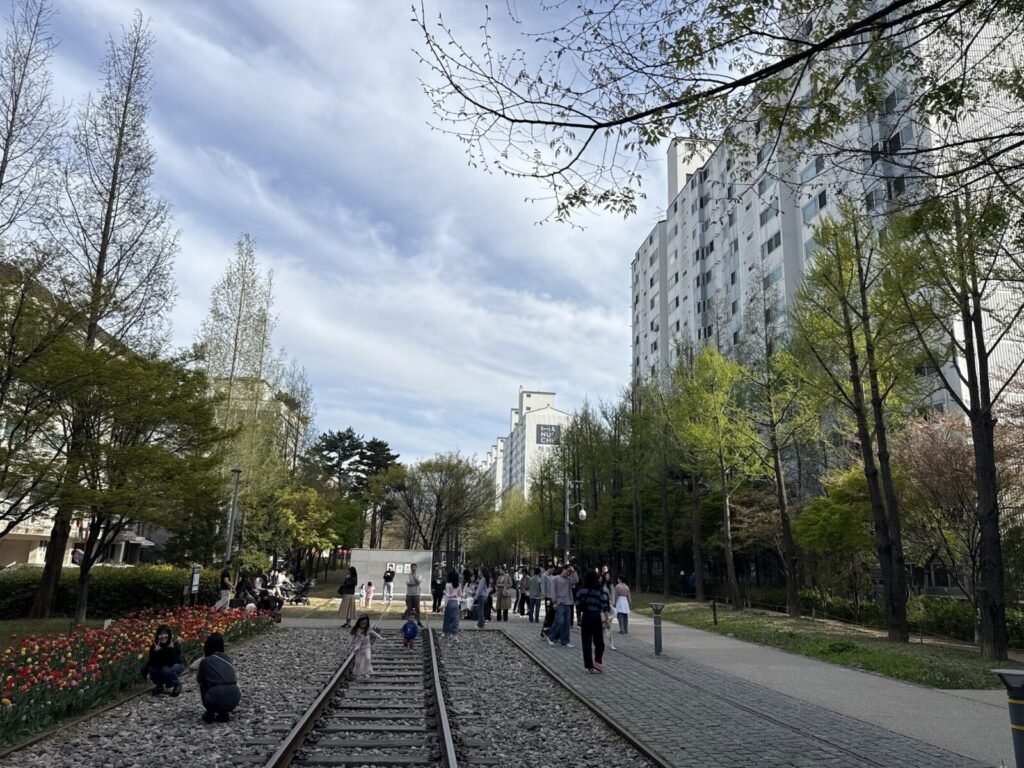
Our usual starting point is Sacheon Bridge. From there, the path toward Yeontral Park passes through a section where the original railway tracks are still in place. No trains run on them, but the rails remain.
In spring, tulips line both sides of the tracks. The photo opportunities here draw a crowd, and people queue up for a shot on the rails. What stands out more than anything, though, is the kids. Children run along the gravel between the rails, balance on the tracks, climb the edges. There are no cars, no traffic, no reason to hold anyone back. For parents, that freedom is a relief.
Walking the full Yeontral Park section at a slow pace takes around 20 to 30 minutes. There’s no reason to rush it.
People-Watching Is Half the Point
On weekend afternoons, the foreign visitor ratio here is noticeably high. There are stretches where Korean isn’t the dominant language you hear. Hongdae draws international crowds, and the park has become a fixture on travel apps and itineraries. Walking through it means sharing the path with people from all over — which becomes its own kind of entertainment.
Cafes, Coffee, and a Beer on the Grass
The Yeontral Park section is lined with cafes and restaurants on both sides. We don’t pick a specific place in advance. If there’s a seat available somewhere that looks good, we go in. The quality is consistently solid — competition along this strip is high enough that mediocre places don’t last long.
On a good weather day, the better move is often a convenience store beer on the grass. Finding an open patch of lawn on a busy weekend takes some patience, but it’s one of the few places in central Seoul where sitting outside with a drink in the afternoon feels completely natural.
The Mapo Tour Bus — Worth Knowing About
While walking through the park, you’ll notice an unusual-looking stop: the Mapo Circular Train Bus (마포순환열차버스). It’s a small electric bus styled to look like a train, and it connects 17 stops across Mapo-gu — including the forest park, Mangwon Market, Mangwon Han River Park, Seoul World Cup Stadium, Sky Park, and more.
Key details:
- Fare: Adults ₩5,500 / Teenagers ₩3,500 / Children ₩3,000 (all-day unlimited pass)
- Hours: Tuesday–Sunday, 10:00–22:00 (closed Mondays and public holidays)
- Frequency: Every 60 minutes
- Tickets: Mapo Tourism Information Center, the Mapo Tour Bus app, or on-site kiosks
My daughter spotted it and immediately wanted to get on. We looked up the route and realized a full loop takes over an hour. We decided to save it for another day when we have more time and want to cover Mapo properly. For foreign visitors who want to see multiple Mapo neighborhoods in one go, this is actually an efficient option.
Extending the Walk: Yeontral Park to Hongjecheon and Beyond
If you start from the Hongdae side and walk in the opposite direction, the trail leads through Yeontral Park and continues along Hongjecheon Stream all the way to Hongjae Waterfall. It connects as a single continuous route.
On days when a 20-minute stroll isn’t enough, following the path further north turns the trip into something more substantial. I’ll cover the Hongjecheon and Hongjae Waterfall route in a separate post.
When to Go
Spring (March–May) is the best time. Tulips and cherry blossoms can overlap for a brief window, and the park is at its most photogenic. Autumn (September–November) is a close second. Summer is manageable — the tree coverage is dense enough that it’s cooler than you’d expect. Winter sees fewer visitors, which makes it easier to walk without navigating crowds.
The least crowded times are weekday afternoons and weekend mornings. Weekday afternoons between 2:00–4:00 PM on weekends are the busiest.
Getting There
- Subway: Hongik University Station (Line 2 / Airport Railroad / Gyeongui-Jungang Line), Exit 3 — about 5 minutes on foot
- Driving: Not recommended. Parking near the park is limited, and weekend congestion in the Hongdae area is significant.