Korea Apartment Recycling Is Strict — Here’s What I Learned the Hard Way
In Korean apartments, taking out the recycling is dad’s job.
At least that’s been my experience. On recycling nights, it’s mostly fathers heading down to the collection area — carrying flattened boxes, bags of plastic bottles, bundles of paper. Nobody assigned it to them. They just show up.
I’m the same way. Wednesday and Sunday evenings, I flatten the boxes and head downstairs. Sometimes my daughter says she wants to come. So we go together.
When I first moved into our current apartment complex, I noticed something at the recycling area.
A small basket. Full of tape scraps. And around it, every single cardboard box had been flattened completely — no box was left in its original shape. They were all broken down and stacked flat.
I understood immediately. You’re supposed to remove the tape and flatten everything before you bring it down. Nobody told me this. No one handed me a rulebook. I just looked around and figured it out.
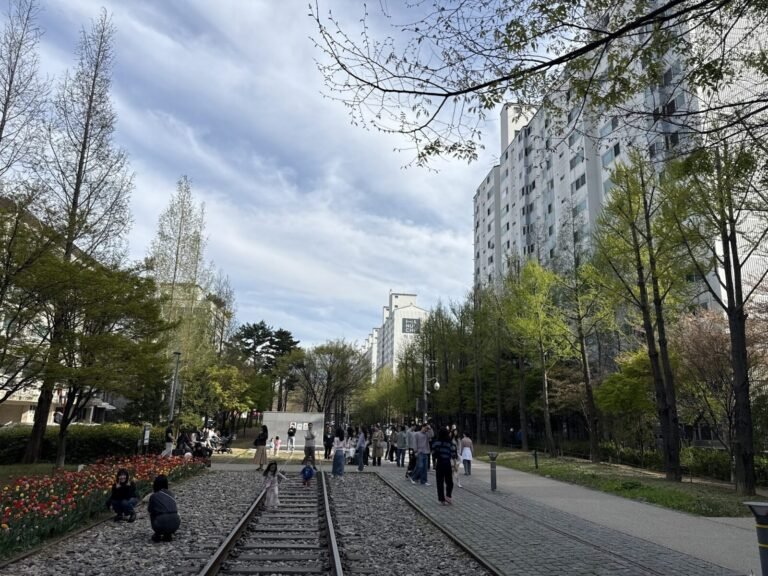
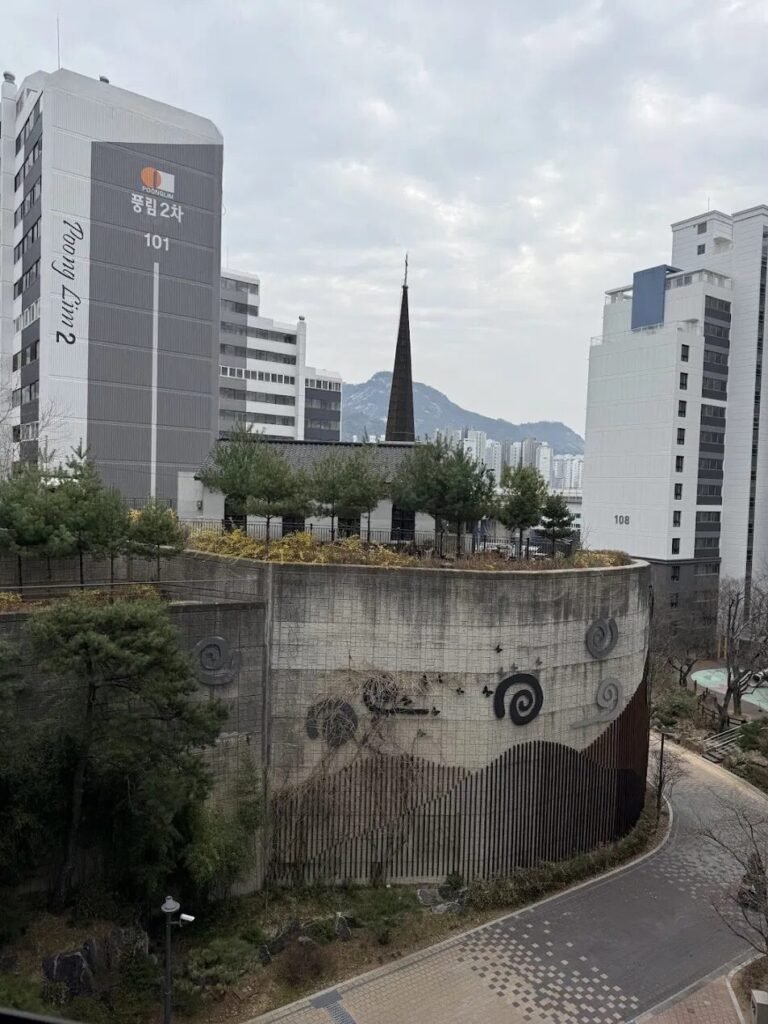
That’s how recycling works in Korean apartments. <!– 이미지 삽입: 아파트 단지 전경 사진 –> <!– Alt 텍스트: Large apartment complex in Seodaemun-gu, Seoul — buildings like this typically have their own recycling collection schedules and rules –>
Every Apartment Complex Has Its Own Rules
Here’s the first thing to understand: there are national recycling standards in Korea, and then there are your building’s rules on top of that.
Korea’s Ministry of Environment requires separate collection of paper, plastic, glass, cans, and vinyl. But each apartment management office layers its own specific requirements on top of that baseline.
My previous complex had around 500 units. You could drop off cardboard however you liked, as long as it was broken down. My current complex has around 1,500 units — and tape removal is mandatory. There’s even a dedicated basket for the tape scraps. Larger complexes tend to have stricter standards.
For foreigners moving in, this is the hardest part. The building-specific rules aren’t written in English anywhere. Nobody proactively explains them to you.
What Happens When You First Move In
There’s at least one thing the management office does tell you upfront.
When I registered my move-in at the office, they told me which days recycling collection happens — Wednesday and Sunday in our case. That’s the basic information you’ll get.
Everything beyond that — tape removal, sorting requirements, which bins are for what — you figure out by going down and looking.
How Often Is Recycling Collected?
Collection frequency varies significantly between complexes.
- Twice a week (my current complex): The most convenient setup. Boxes never pile up at home.
- Once a week (my previous 500-unit complex): Genuinely inconvenient. Between Coupang deliveries and grocery orders, a week’s worth of cardboard stacks up fast. Our entryway looked like a recycling depot by day six.
- Daily collection exists at some larger complexes, though I’ve only heard about this secondhand.
If you’re apartment hunting, this is worth asking about. Recycling is a weekly reality — the frequency affects daily life more than you’d expect.
The Tape Rule Nobody Tells You About
There’s a practical reason tape has to come off the box before you flatten it.
Packing tape is made of synthetic material — it can’t go through the same recycling process as paper. If tape-covered boxes make it to the sorting facility, they get flagged as contaminated and rejected. They end up as general waste.
There’s also a physical reason: you can’t properly flatten a box with tape still holding it together. The tape is what keeps the box rigid. Remove it, and the whole thing folds flat easily.
Shipping labels are the same story. They’re vinyl, not paper — they need to come off before the box goes in the bin. A lot of people skip this step because it’s tedious. Those boxes don’t actually get recycled.
What Gets Sorted — And What Doesn’t
A standard Korean apartment recycling area has more bins than most foreigners expect.
The usual lineup: paper and cardboard, plastic, cans, glass, vinyl, styrofoam.
Clear PET bottles and milk cartons are where it gets complicated — and where complexes diverge.
In principle, clear PET bottles should go in a separate bin from regular plastic. Milk cartons should be separated from regular paper, since they’re made from virgin pulp and require a different recycling process. But dedicated bins for these aren’t universal. Our complex doesn’t have them. The management staff handles the downstream sorting.
The fastest way to understand your building’s system is to go down to the recycling area and look at what bins exist. That tells you everything.
The Guards Are Always Around
At our complex, security guards come through the recycling area regularly throughout collection hours.
They pull out misplaced items, re-stack boxes that have shifted, tidy up bins that are overflowing. They rarely say anything directly — they just quietly keep things in order.
Foreigners often think of apartment security guards as gatekeepers. In reality, they’re the people who keep daily life in a Korean apartment complex running. The recycling area is part of their territory.
The practical implication: if you put something in the wrong bin, you might come back the next day and find it sitting outside the bin. No confrontation, no note. Just quiet correction.
What Happens to Cardboard When It Rains?
On rainy recycling nights, the collection area fills up with wet cardboard. I’ve always wondered — does any of it actually get recycled?
The answer is no.
Wet paper can’t be processed at sorting facilities. The fibers break down in a way that makes them unusable. Wet cardboard that makes it into the recycling stream either gets rejected at the facility or ends up being incinerated as general waste — even if it went into the right bin.
The rule is straightforward: paper should be dry when you put it out. If it gets wet, let it dry completely before bringing it down.
In practice, nobody retrieves soggy boxes from the recycling area and takes them back inside to dry. Once it rains on collection night, that cardboard is effectively headed for incineration.
On rainy evenings, skip the paper and cardboard. Bring it down next collection day.
What I Tell My Daughter at the Recycling Area
When my daughter wants to come along, I don’t rush through it.
I show her which bin the boxes go in and which one takes plastic bottles. I explain why the tape has to come off. I tell her why we don’t bring cardboard down when it’s raining.
Ten minutes at the recycling area covers more ground than a lesson about the environment ever would. It’s immediate, it’s concrete, and she can see exactly what happens to each item.
Recycling in a Korean apartment complex is a small but real part of living in a shared community. Getting it right matters — not because someone is grading you, but because a thousand other households are using the same space.
My daughter is learning that. One recycling run at a time.
For Korea’s official recycling and waste separation guidelines, see the Ministry of Environment waste guide.