Drinking Water in Korea: Why Koreans Don’t Drink Tap Water (And What They Do Instead)
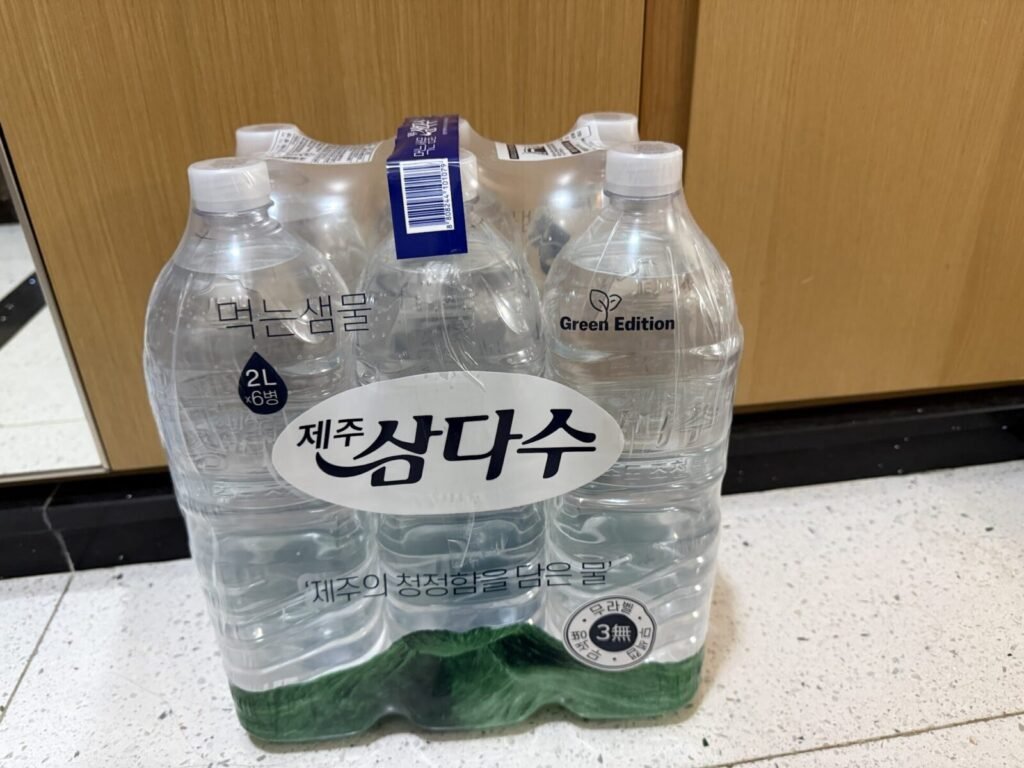
Yesterday morning, two packs of Jeju Samdasoo — six 2-liter bottles each — were sitting outside my front door. I’d ordered them on Coupang the night before. Next-morning delivery.
My family has been buying water this way for a long time. Back in the early-to-mid 2000s, we used an 18.9-liter water cooler at home — the kind you usually see in offices, where you flip the large bottle upside down and slot it into the dispenser. Cold water, hot water, on demand. Most people assumed that was just an office thing. We just used it at home because it was convenient. Now that’s been replaced by Coupang delivering Samdasoo to my door. The form has changed. Buying water has always been part of how we live.
This surprises a lot of foreigners. Korea has some of the safest tap water in the world. So why do Korean households buy water instead of drinking from the tap? The answer goes back further than you’d expect.
Selling Bottled Water Was Illegal in Korea Until 1994
This is the part that catches most people off guard.
Until 1994, selling bottled water to Korean citizens was illegal. The government’s reasoning was straightforward: allowing bottled water sales would signal that tap water wasn’t safe — effectively admitting the state had failed at water infrastructure. There was also a class argument. If wealthy people bought clean water while everyone else drank from the tap, it would create social division.
The one exception was the 1988 Seoul Olympics. The government temporarily allowed bottled water sales for foreign athletes who might be skeptical of Korean tap water. The moment the Olympics ended, the ban came back.
Then came 1991. A Gumi electronics manufacturer leaked 30 tons of phenol — a highly toxic industrial chemical — into the Nakdong River. Tap water across the Daegu region started smelling. People who drank it reported headaches and vomiting. Public trust in tap water collapsed.
In March 1994, Korea’s Supreme Court ruled that the bottled water ban violated citizens’ constitutional right to pursue happiness — specifically, the right to choose clean drinking water. The ban was lifted. The Drinking Water Management Act followed in 1995, and the bottled water market opened for real.
Koreans in their 30s and older remember when buying water simply wasn’t a thing. Younger generations have grown up treating it as completely normal. The phenol incident is history to them — but the distrust it created has outlasted the memory of the event itself.
Tap Water Is Safe. Most Koreans Still Won’t Drink It.
Seoul’s tap water is branded “Arisu” — named after the Han River’s ancient name. It meets all 303 WHO standards for drinking water quality and holds UN and ISO certification. By any objective measure, it’s among the best tap water in the world.
And yet. A government survey found only 36% of Koreans drink tap water at all, and some of those boil it first.
Two reasons. First, older apartment buildings have aging pipes. Even if the water leaving the treatment plant is clean, pipes that haven’t been replaced can affect what comes out of the tap. Seoul has been replacing old pipes since 2017 — over 95% are now updated — but the perception hasn’t caught up with the infrastructure.
Second, decades of cultural habit. Once a generation grows up buying water, the next generation does too.
For short-term visitors: tap water in Korea is safe to drink, especially in newer buildings. In older apartments, let it run for 30 seconds first. You won’t get sick either way.
For official water quality data, see the Seoul Arisu Water Quality Information page.
How Korean Households Actually Get Their Drinking Water
There are three real options.
Option 1: Water Purifier Rental (정수기)
The most common setup in Korean homes. Brands like Coway, LG PuriCare, SK Magic, and Chungho Nais offer countertop or under-sink purifiers on monthly rental contracts.
Cost: around ₩30,000–40,000 per month. I used one at my previous apartment — just over ₩30,000 a month. Cold water and hot water on tap, filter maintenance handled by the company. Convenient.
The catch: minimum contract of 3 years or more. And when you move, relocation fees apply — typically ₩30,000–60,000 depending on the brand, up to ₩100,000+ for certain models. If your sink countertop is natural marble or engineered stone, drilling costs can add another ₩100,000.
If you’re in a jeonse or monthly rental and don’t know when you’ll move next, a 3-year contract gets complicated fast. That’s why I didn’t reinstall one after my last move.
Option 2: Buying Bottled Water Directly
Convenience stores, supermarkets, grab-and-go. Most practical for short stays or small households.
One thing worth noting on price: a 500ml bottle of water at a Korean convenience store costs around ₩1,000 or more. That works out to roughly ₩2,000 per liter — more expensive than gasoline per liter. Korea is a country where water costs more than fuel, by volume.
Option 3: Bottled Water Delivery
What I do now. Order Samdasoo 2L bottles on Coupang, they arrive the next morning before I wake up. Rocket Delivery means ordering at night gets you a delivery by early morning. When a sale price comes up, I buy in bulk — takes an extra day or two, but it’s cheaper.
Monthly cost: around ₩20,000. Not dramatically less than a water purifier rental. But no contract, no relocation fees, no commitment. For someone living in jeonse with an uncertain move timeline, the flexibility is worth more than the small price difference.
Why Samdasoo Has Been #1 for Over 25 Years
Korea has over 200 bottled water brands. Jeju Samdasoo has been number one since its launch in 1998 — within six months of release, it was already market leader.
The reason is where it comes from. Jeju Island is a volcanic island. Rainwater that falls on Hallasan filters down through layers of volcanic rock over approximately 18 years before it’s collected at 420 meters underground. It’s the only volcanic bedrock water in Korea. The production facility holds US FDA, Japanese Ministry of Health, NSF, and ISO22000 certifications.
The result is water with a pH of 7.8 — mildly alkaline, smooth to drink. People who pay attention to water taste notice the difference. Side-by-side with other brands, Samdasoo holds up.
Full product and sourcing details at the official Jeju Samdasoo FAQ.
Which Option Makes Sense for You
| Situation | Recommended Option | Monthly Cost |
|---|---|---|
| Short-term travel (under 2 weeks) | Convenience store bottles | ₩1,000+ per 500ml |
| Long-term stay, owned home or stable lease | Water purifier rental | ₩30,000–40,000 |
| Long-term stay, frequent moves or jeonse | Coupang bottled water delivery | ~₩20,000 |
| Environmentally conscious | Faucet filter (one-time install) | ₩30,000–50,000 one-time |
Tap water is safe. Newer apartments especially. If you’re visiting for a week or two, drink from the tap and you’ll be fine.
But if you’re staying longer and want to understand why the Korean family next door has Samdasoo stacked by the front door — now you know.